
Temple dance in India represents a beautiful blend of devotion, ritual, and artistry which has sustained through centuries with the help of performance and patronage. Although they faced periods of disruption especially during the colonial period, continuous efforts played a vital role in preserving these traditions, allowing temple dance to continue as a living tradition that reflects the intimate bond between the human body and the divine world.


Temple Dance in India: Sacred Performance and Cultural Continuity
India is a land where traditions continue across centuries, carrying forward cultural values, beliefs, and practices from one generation to the next. Temple dances are one those many traditions which occupy a significant place in India as they bring together worship, ritual and art. These dances were deeply connected to the religious practices because they were performed as offerings to the deity rather than for the public amusement. These dances were performed within temple precincts and formed an integral part of daily and seasonal temple rituals.
Historically, temple dance traditions were sustained by devadāsīs who were well trained in dance, music, poetry, and ritual practices. Royal patronage played an important role in keeping these traditions alive. Epigraphic records also suggest that during the Pallava and Chola periods these traditions received support. One such record highlights the social and ceremonial importance of highly successful singers by mentioning honorific titles like Thalaikkoli.Colonial interferences and the nineteenth century reform movements caused a break in these systems, but in the twentieth century revival attempts guaranteed their survival through classical dance forms.


Regional temple traditions reveal both continuity and diversity. At the Jagannath Temple in Puri, the Mahari and Gotipua traditions shaped the foundations of Odissi which is now recognized for its grace and devotional depth. Kerala’s temple tradition led to the emergence of Kathakali and Mohiniyattam, which continue to be performed as festival performances. In Tamil Nadu, royal patronage and temple ritual gave rise to Bharata Natyam which was refined by the Thanjavur Quartet and profoundly rooted in the region’s monumental architecture.
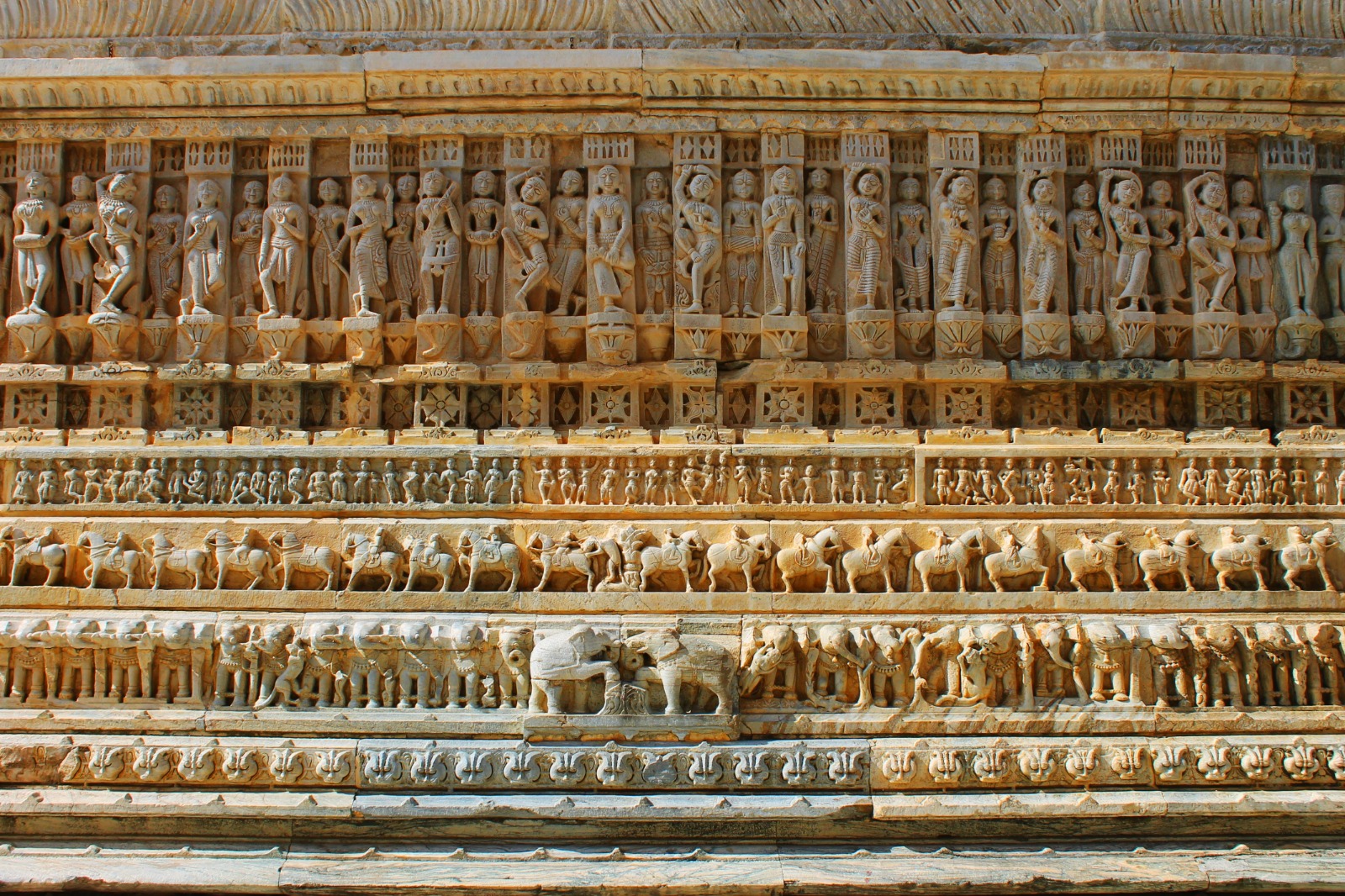
The close relationship between dance and architectural elements of the temple is hard to ignore. Carved along the temple walls, apsarās (celestial nymphs) have been shown in a realistic manner which makes them less like static stone carvings and more like frozen dancers, echoing the presence of living performers. They have been depicted writing love notes, twisting at the waist, or pausing mid- gestures.
Ashok Khanna’s Rhythm in Khajuraho invites us to an intimate dialogue between body and building. Through iconic performances such as Yamini Krishnamurthy’s Bharata Natyam blurs the boundary between architecture and movement as if architectural elements itself were responding to the dancer’s body. Dancer S. Kanaka, for example, drew directly from the architectural element of the temple, shaping her body like the upward surge of the śikharas.
Temple dance communicates through a rich symbolic language of mudrās, postures, and expressive techniques (abhinaya) which help to convey layered meanings. Each movement of a dancer serves as a medium between divine and the devotee. Textual sources such as Rasikajana Manollasini, authored in the early twentieth century, by devadāsī Venkatasundara Sani gives us the information about embodied knowledge held by the temple dancers.
Despite periods of decline, temple dance continues as a living tradition, preserved by communities through festivals, training, and sustained performance practice.
Junoon is actively creating platforms for training, documentation and public engagement, through these steps, temple dance continues to represent the close association between art and devotion in India, not as a distant memory, but as a living and continuously evolving practice.
This is junoon
By Sauban Ahmad
Research Intern
The Junoon Foundation

Comments