
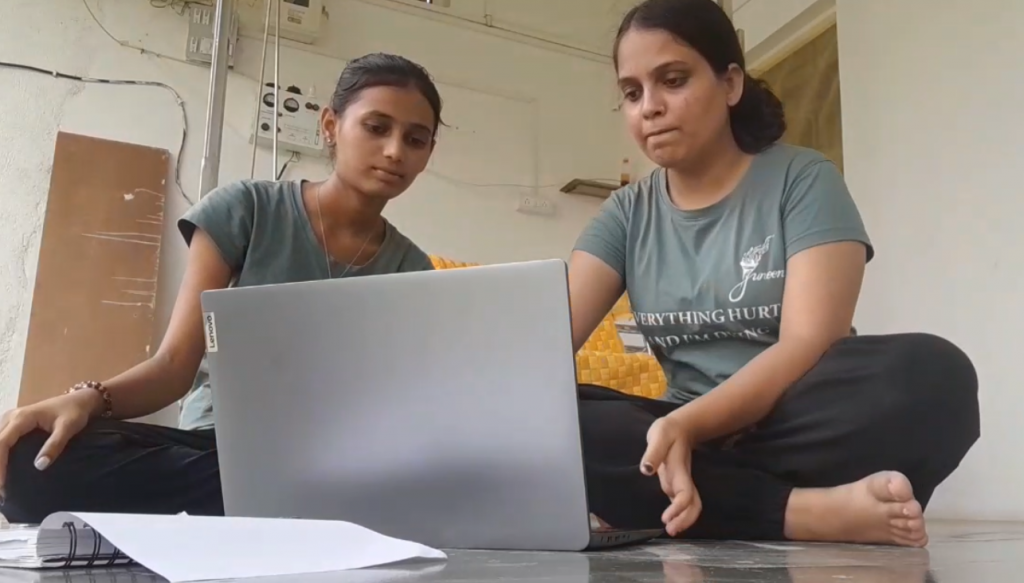
When I first arrived in Dhasa for my on-field experience with Team Junoon, it felt almost inevitable that I’d begin to write. I’ve always turned to words to make sense of the world, and here, surrounded by a life so different yet strangely familiar, the impulse was natural. As a writer, I don’t just document, I listen, absorb, and reflect. This wasn’t meant to be a formal diary or a residency project at first. But as the days passed and my inner landscape began to shift, this became something more, unfolding of thoughts, emotions, and encounters that shaped me. Somewhere between conversations with strangers, watching the girls at Junoon move, and simply sitting in the shade of still afternoons, this turned into an artistic residency. Not a planned one, but one that emerged from the depth of feeling and attention this place asked of me.
Day One – Arriving in Dhasa
Today marked the beginning of something I’ve been quietly yearning for: a space to pause, to breathe, and to create. I arrived in Dhasa for a week-long artist residency that was part of a much longer internship duration and association with The Junoon Foundation, unsure of what I’d find, but certain I needed this. As a student, I often find myself caught in a cycle of deadlines and decisions. But this summer, I wanted something different, time with my thoughts, and the chance to explore my writing without pressure.
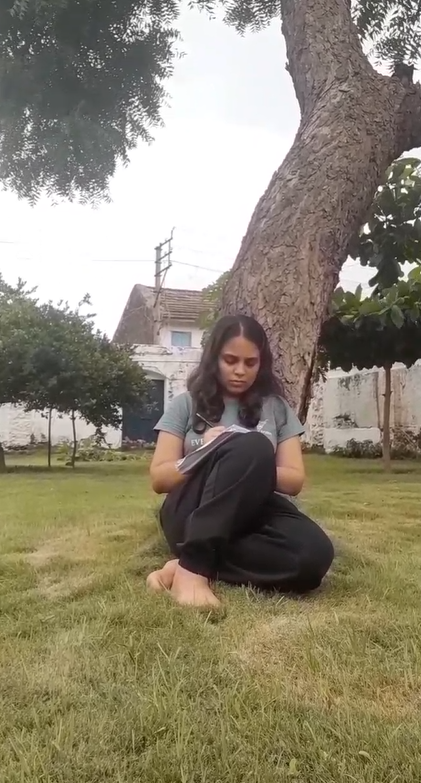
I’m staying at the Vidyalaya, a place that seems to carry everything one might need to live simply and intentionally. There’s a quiet generosity to it: a lawn framed with green, trees casting slow-moving shadows, and corners filled with calm, deliberate life.
I chose this residency because I wanted to be somewhere rooted in culture, connected to rural India far from the familiar rhythms of city life. This small place in Gujarat offers exactly that: a life coloured by simplicity, where beauty doesn’t demand attention but quietly reveals itself.
When I arrived in Gopalgram, I was greeted by fields, temples, and kind strangers. I knew then that I had come to the right place, one where I could step away from the usual noise and find a new rhythm.
As a student standing at the edge of adulthood, full of questions and restlessness, this space gives me the solitude to sit with it all.
What struck me first wasn’t the silence, but how everything here moves with intention. Nothing rushes. Nothing interrupts. I spent the day simply walking, meeting the light, the heat, the people. I didn’t pull out my notebook right away. Instead, I let the place reveal itself on its own time.
There’s something humbling about being a guest in a landscape, just observing, without needing to respond.
So I didn’t write much today. And maybe that’s exactly what Day One needed to be: a soft beginning. A reminder that the real work will come not just from creating, but from learning to pay attention.
And today, that felt like enough.
Day 2: Immersing & Observing
Today in Dhasa was about connecting with people, with place, and with purpose.
My morning began with an authentic breakfast at Daksha Ben’s home. Her space was unlike any I’d been in before, rooted in culture, filled with quiet stories, and comfortingly lived-in. Despite the language barrier, she made me feel entirely at home. Our conversation flowed gently, and I was struck by how naturally she carried herself, grounded, open, and accepting. It’s rare to meet someone who makes you feel seen so quickly.
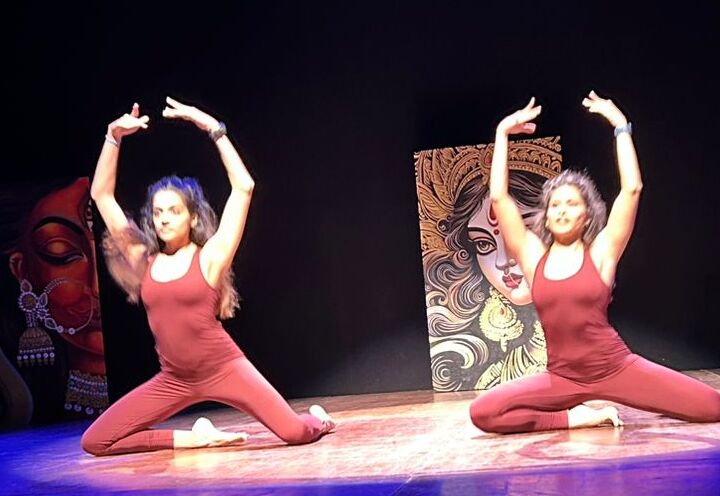
Later, I visited the Junoon Academy in Gopalgram, where village girls learn Bharatanatyam and Ballet. Dhasa, in its stillness, offers space for solitude, yet it’s also richly connected to art and community. That balance feels rare.
The girls at the academy moved with discipline and joy. Their commitment to their practice was beautiful to witness not just the dance itself, but the way they held each other up. Teaching one another, correcting gently, laughing between counts. There was a quiet sisterhood there. It reminded me of the women in my life, those sacred, rare relationships built on mutual care and presence.
In the evening, I met the women of the village. After long days of work, they gather at the school for movement sessions led by the girls. These sessions are not just physical releases, they’re emotional ones too. A space where the weight of responsibility is temporarily set down. Laughter, breath, stretch, all held in a room filled with shared relief.
In many ways, I realised I’m here for something similar. A pause. A space to be without needing to do.
These interactions stirred something deeper. I began to ask myself:
What stories do I want to write?
How does writing make me feel, truly?
And is it necessary to always have an audience?
Questions I don’t yet have answers to. But they make me feel alive. And that, I think, is a good place to be.
I went to bed full of thoughts, of questions, of quiet inspiration.
Day 3: Practice & Process
Meeting My Younger Self
Now that I feel more grounded and connected to Dhasa, I allowed myself the space to truly write today.
I sat with the environment unhurried, open. I listened to what it had to say. I paid attention to how it made me feel, letting those feelings take shape in words.
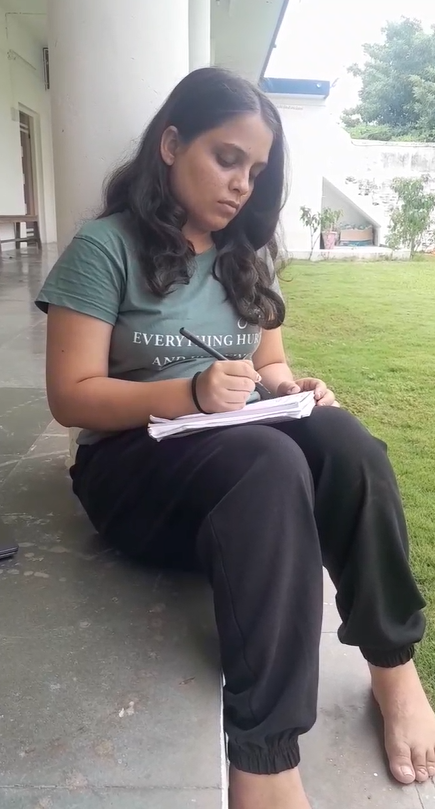
To my surprise, it didn’t push me to write right away. It invited me to sketch, something I hadn’t done in years. It felt like reuniting with a younger version of myself, one who was endlessly curious and unafraid to try new things. That girl would sign up for music clubs or martial arts without hesitation. Somewhere along the way, I became more cautious, more selective about what I invest my time in, more hesitant to wander too far from my comfort zone.
Writing has always been my safe space. It’s deeply personal, not something I share easily. I never needed an audience, just a sense of being heard, even if only by the page. It was my way of expressing without fully revealing. But as I’ve grown, I’ve started to restrict even that. I’ve begun to evaluate everything, even creativity, through a lens of return: Will it lead to something? Is it worth the time?
This mindset has taken a toll on my personal growth.
These days in Dhasa are helping me let that go. I came without a fixed plan, just the intention to be. And in doing that, I’m discovering that I’m more than just one art form, more than just one path to “success” as defined by society.
I’m not a professional writer. But that doesn’t make what I create any less meaningful. The arts in my life don’t need to justify themselves through productivity or profit. They can simply be. I can sketch quietly in a notebook. I can write poems no one reads. And it can still be enough because it makes me feel like a creator.
These days of solitude and self-reflection are not indulgent. They are necessary. I hope more people find moments like this, to meet themselves again as artists, to create without expectations, and to rediscover the joy of making something simply because it moves them.
In a world that weighs everything against output, I’m learning to reclaim the value of process.
Day 4: Showing the Growth
Today began with a sense of purpose. I woke up feeling clear. Today was about giving back. Over the past few days, I’ve spent time with the girls at the Junoon Academy, sitting with them, listening to their stories, their dreams, their daily routines, and the quiet strength that runs through them. These conversations stayed with me, and I found myself wanting to contribute something meaningful to their journey as young artists.
Hema, who was visiting the academy too, felt the same. We spent the morning putting together a session that would offer the girls something both practical and empowering, a workshop on how to present themselves and their art with clarity, confidence, and pride.
It wasn’t about teaching from above, but about sharing, artist to artist, learner to learner. We designed the session to be light and engaging: ice-breaker games to ease everyone in, followed by guided reflections, group sharing, and role-playing different scenarios where the girls might need to speak about their work, whether at a performance, in a classroom, or even just to a curious stranger.
What stood out most was how open and responsive they were. There was laughter, a little nervousness, and also deep honesty. Some of them spoke of being shy or unsure about their worth as artists. Others carried quiet confidence but hadn’t yet found the words to express it. It was beautiful to witness that shift, to see a girl go from hesitating to share, to slowly, steadily speaking her truth.
One girl shared how she often feels her art isn’t ‘important enough’ to talk about. It was a small moment, but it struck something deep. How many of us, especially young women, grow up feeling the need to downplay our voice? I saw how this space, this residency, this very day, was about gently undoing that.
The workshop began to feel less like a structured session and more like a circle of artists reflecting on why they create and what their work means to them. We spoke about the role of art in expressing one’s identity, how dance, music, or any creative form becomes a mirror, a companion, a language when words fall short.
At one point, I stepped back just to observe. There was something deeply moving about seeing the girls speak up , not to impress, but to be seen. To own their space. It reminded me how vital it is, especially for young artists, to feel they have a voice, and that it matters.
I came in hoping to guide, but left feeling deeply guided myself. The session reminded me how important it is to remain connected to your own story, to carry it with intention, not just in your words, but in the way you move, create, and show up in the world.
Today reaffirmed something I’ve always believed: that growth isn’t always loud or dramatic. Sometimes, it’s just one young girl raising her hand and saying, “I want to try.”
And that felt like everything.
Day 5 – A Gentle Goodbye
Today is my last day in Dhasa. And while I arrived here seeking space to write and reflect, I’m leaving with something far deeper, a renewed sense of purpose, connection, and clarity, not just as a writer or artist, but as a human being.
When I first stepped into this place, I thought the residency would be a time to pause and focus on personal goals, to write, to be still, to reconnect with myself. And it was. But slowly, the purpose evolved. Through conversations, observations, and moments of quiet witnessing, I began to see how much this experience was also about others. About lives that are very different from mine. About listening, truly listening, to people’s stories, their joys, their griefs, their everyday strength.
As a Psychology major in my third year, I’ve spent a lot of time learning about human behaviour in classrooms and textbooks. But here, I’ve experienced the human psyche in its raw, lived form. The people of Dhasa, especially the young girls at the Junoon Academy, have offered me insight into the layers of emotional experience that no theory could teach.
Listening to someone speak about their life, their dreams, their fears, even in passing moments, moved me in ways I didn’t expect. These interactions have shown me the emotional depth behind things we often call “small” or “ordinary.” They’re not. They’re profound, and they stay with you.
One of the most impactful moments was meeting Sneha, a young girl living with epilepsy. Watching Mythili, through whom I first experienced Junoon back in school, respond with care, not just in a medical or logistical sense, but with a deeply emotional and social approach through Junoon’s support, showed me how art and empathy can together become healing tools. Seeing how dance and movement were gently woven into Sneha’s care reminded me why I study Psychology in the first place. That moment anchored me. It reminded me that the work I hope to do is real, needed, and rooted in care.
My time here has also given me something more subtle but just as important, a deeper connection to my country. Not in a nationalist sense, but in a community-oriented, empathetic way. I’ve always known India was diverse, but here, I felt that diversity, through language, rhythms of daily life, values, and silences. I now carry an understanding of people whose lives are distant from mine but whose emotions mirror mine in the most human of ways.
This residency has given me practical insight that textbooks couldn’t. It has taught me to feel the knowledge I’ve been gathering, to see the theory alive in real people’s experiences. I am walking away not just as a more motivated writer, but as a Psychology student with a renewed sense of direction, and as a young adult who feels a little more grounded in her search for purpose.
Though my artistic residency ends today, it feels more like a beginning, the start of a long journey into deeper reflection, connection, and storytelling. I leave with stories I didn’t expect to find, lessons I didn’t know I needed, and a quiet confidence that I’m growing, not just in skill, but in spirit.
Written By,
Nikita Rathod,
Curriculum Development
The Junoon Foundation,
India.
Comments