
In this reflection, we explore a truth at the heart of Junoon’s practice, that fitness is only the beginning of a Dancer’s journey. Strength, stamina, and flexibility are essential, but they are not the destination. At Junoon, every push-up, every stretch, every adavu is more than exercise; it is preparation for meaning. This piece explores how our approach transforms routine fitness into purposeful movement and how the body trained for Dance becomes an instrument of expression, devotion, and storytelling.

Why Dance Education is Different from a Fitness Regimen.
A fitness regimen is, at its heart, a science of the body. It builds endurance, stamina, and strength through repetition and discipline. It trains muscles to work harder, lungs to carry more oxygen, and the heart to beat stronger. These are noble goals, and they are essential foundations for health.
But Dance education, as we nurture it at Junoon, is something altogether different. Yes, we build endurance, stamina, and strength too, but always as a means, never the end. Every movement in our curriculum is a vessel: it strengthens the body, but simultaneously shapes rhythm, form, along with expression. When a student begins with adavus, or foundational steps, they are not only conditioning their alignment and posture; they are also learning to listen, to embody rhythm, to carry culture in the lines of their limbs.
Where fitness thrives on repetition for physical gain, Junoon’s pedagogy treats repetition as a means of refinement. A plié or an araimandi is never “checked off” once mastered; it is returned to, cultivated across years, each cycle peeling back a deeper layer of understanding. The body is not only strengthened to move, but to move with intention and clarity.
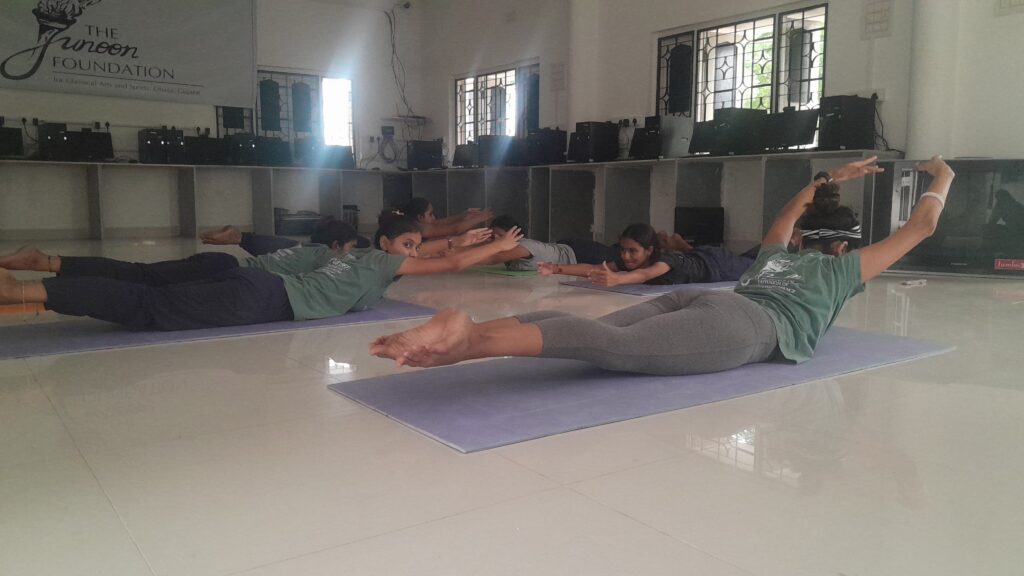
This is why our conditioning cannot be reduced to mechanical drills. We draw inspiration from ballet fitness practices such as Sleek Technique, where exercises are designed not as abstract workouts but as precise preparations for movement. Ballet-inspired conditioning strengthens turnout, sharpens core control, and refines balance so that a Dancer is ready to embody demanding steps without strain. At Junoon, we adapt this wisdom into our practice: every push-up, stretch, or hold has a purpose that connects directly to the Dancer’s art. The routine is never just about muscle; it is about cultivating the exact instrument needed to express a phrase of Dance.
We have to get all fired up in all our muscles, be at maximum functionality, even to undertake the most basic, fundamental dance routines. So, working out, being fit, these are simply prerequisites, or at best, by-products of being a Dancer.
You come to the dance floor fit to begin with. As you Dance, your mind starts to mark all the areas of the body that need added fitness, all the loose screws that need tightening. The more you Dance, the more your fitness and therefore functionality expands.
With the added functionality, mobility, the range of motion, fitness and flexibility, the extent muscles can extend and endure, and an increasingly focused effort on execution, a Dancer’s ability to tell a story is inevitably enhanced.
This difference is crucial: fitness prepares a body to be stronger; Dance prepares a body to mean something. The Dancer is a thinker, a storyteller, and a custodian of tradition. Training for a Dancer at Junoon does not stop at stamina and flexibility; it expands to the many dimensions that make a Dancer.
A fitness routine transforms the physique. Dance transforms identity. The journey of the Dancer is not about how high the leg can rise or how long the body can endure. It is about what story the movement can tell, what feeling it can awaken, what lineage it can honour.
Movement, in our curriculum, is never just physical activity. It is a discipline that shapes character, a philosophy that anchors values, and a journey of discovery that is both deeply personal and profoundly communal.
Fitness is foundational to learning with Junoon. But it’s only the first step. Over and over again. And a better, fitter way to be is constantly discovered as our students rise to the high standard of Dance our “Foundation” was laid down for, in the first place.
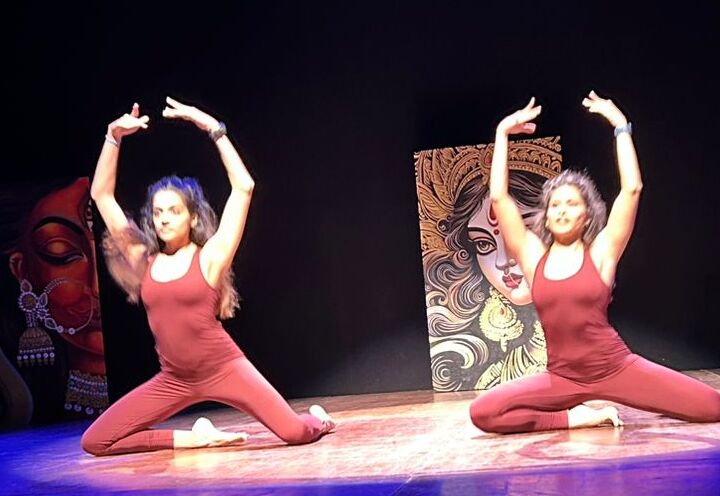
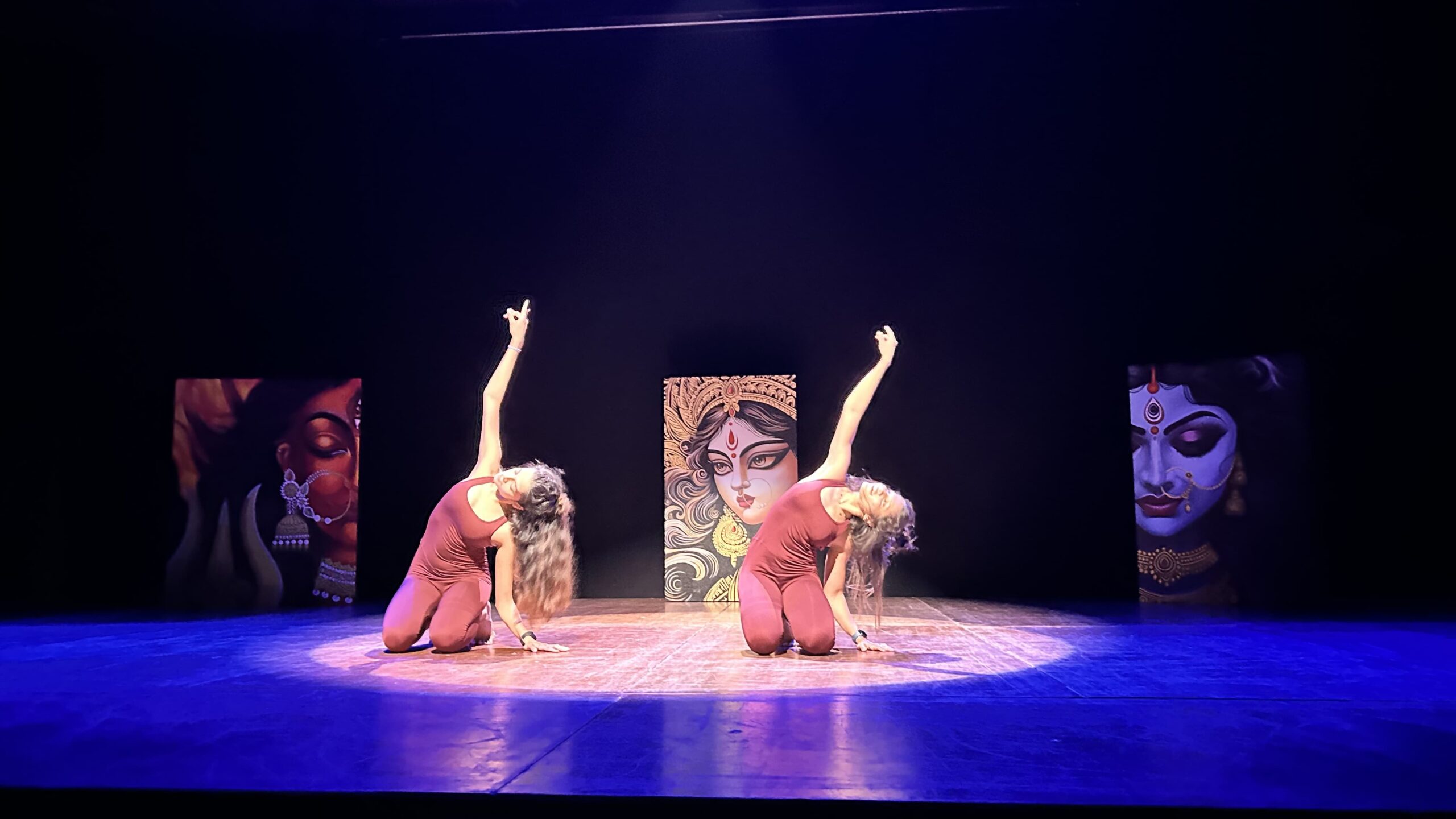
KAYA embodies this truth. It tells the story of the Temple Dancer, a woman who has given her life in service of her art and the divine. Through her, we see how Dance transcends the physical. Every gesture, every moment of stillness, is an act of devotion; every flexed muscle becomes an offering. KAYA is not about fitness or performance, it is about surrender, about what happens when discipline becomes prayer. The Dancer’s body is not just trained; it is consecrated. In her movement lies strength, grace, and purpose, the perfect union of form, function, and faith that defines Junoon’s vision of Dance education.
Warm Regards,
Nikita Rathod
Curriculum Development
The Junoon Foundation
Comments