


We, at Team Junoon, are immensely proud, grateful, and humbled to have successfully brought our first production, KAYA, to life. This performance beautifully explored the Dancer’s most powerful instrument, her body, her kaya. This article dives deep into the making of Kaya, from the conceptualization to the execution, highlighting the struggles, the behind-the-scenes coordination, and the unshakeable spirit of our production team. The production itself was uniquely woven with spoken literature interspersed between the performances, creating a rhythm of reflection and movement that carried the story forward. Every element was intentional, every moment earned, and every step a foundation for what Junoon aspires to become.
The Inspiration
At Junoon, we deeply believe that a Dancer’s body, what we call the Kaya, is the result of years of relentless effort and discipline. Dance, like any other profession, demands time, commitment, and an unwavering pursuit of growth. No one becomes a Dancer overnight or in just a few sessions. The Kaya undergoes a long journey of development and refinement, enabling the Dancer to absorb the nuances of the art form and communicate a story that moves the audience, one that can truly be called beautiful.
Our debut production draws attention to the often unseen struggle, the pain, the perseverance, and the discipline that a Dancer endures daily in pursuit of perfection. The making of the Kaya is a deeply devoted process, where the Dancer places complete trust in the journey, never giving up, fully aware of the transformation their effort will ultimately bring. At its core, Kaya is about the journey of becoming a powerful, demanding evolution into the true identity of a Dancer.
The Team
Our entire team contributed thoughtfully to each segment, ensuring the heart of the production was never lost. Because this wasn’t just a show; it was our first full-scale production, a true reflection of every kaya’s struggle, growth, and transformation.
Once the story was firmly established, our choreographer, Ms. Bhavisha Kothari, took charge of shaping the structure and emotional depth of the performance. She meticulously observed every movement of Mythili during rehearsals, remaining deeply connected to the storyline throughout. Her commitment was clear—ensuring that each dance form performed on stage stayed authentic and pure, with no fusion. We honored the integrity of the dance style by presenting it in its true, distinct form, dedicating ourselves to rigorous training to achieve this.
Our focus remained sharply on capturing the magic and energy we wanted the audience to experience, which guided our careful selection of music and choreography. This extensive process underscored the essential synergy between Dancer and choreographer—a dynamic of teaching, learning, understanding, and celebrating each small victory that carried us through the challenges.
Ms. Bhavisha served as the creative director for the production, steering the overall vision with clarity and passion.
Throughout the entire journey, Mr. Sanjay was a steadfast presence. He played a vital role in shaping the narratives and offered his insightful guidance wherever needed. As the ultimate storyteller, he immersed himself fully, attending rehearsals, participating in ideation sessions, and engaging in all activities that contributed to bringing the production to life. He approached the process with thoughtful inquiry and profound understanding before crafting or narrating the story.
Ms. Mythili, the Dancer, has lived with KAYA—the story—for a while. Writing the script was a means for her to visualize how she’d like the concept to be danced and how best to represent a Dancer’s body—our foremost tool—in the most evocative sense possible. She wanted everyone who watches to understand what it takes to be a Dancer and the journey therein.


The Act
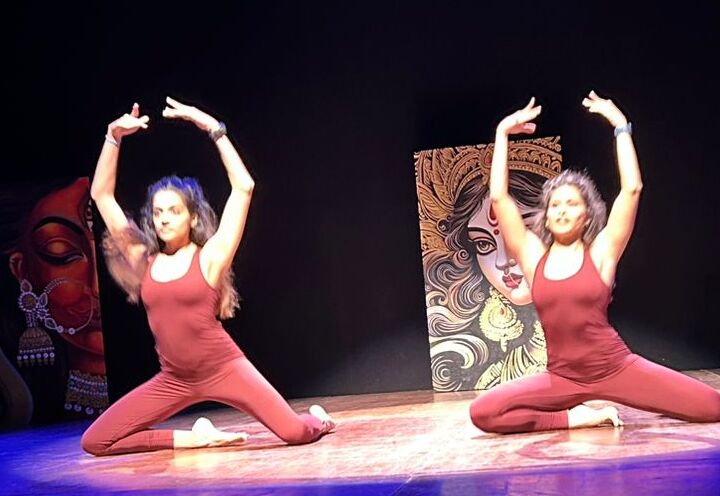
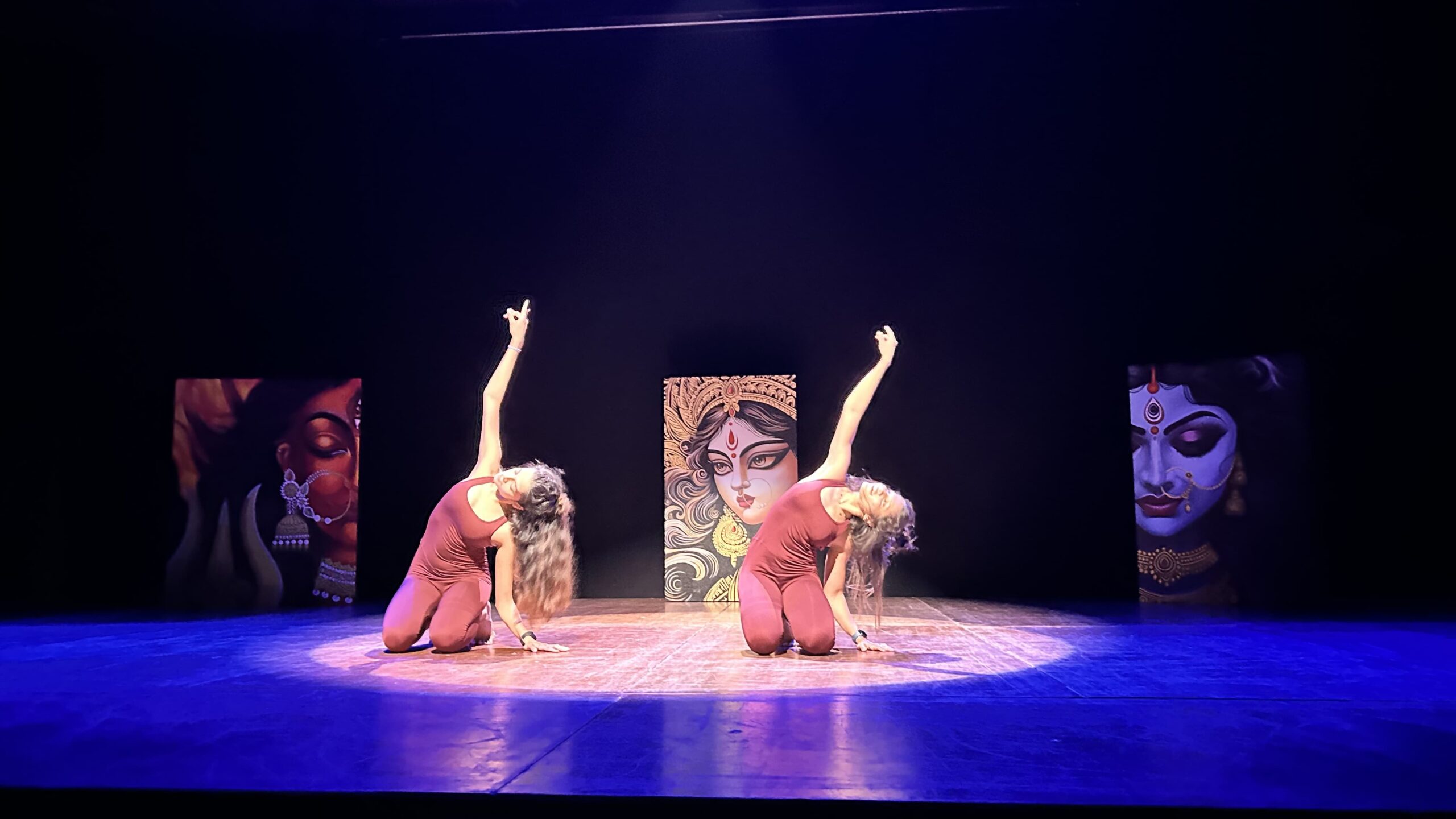
Our performance unfolded in four distinct parts, with each segment revealing a different layer of the same story. The production showcased diverse dance forms: Bharata Natyam, Contemporary, and, Classical Ballet.
Act 1 featured Bharata Natyam, delving into themes of devotion, resilience, and physical expression. It portrayed a woman who, through life’s trials, finds strength and dedication in her chosen path, Classical Dance. Her journey reflects a deep emotional, physical, and spiritual evolution. Despite enduring hardship, her body never falters; it prepares, adapts, and perseveres. It is at once feminine and masculine, embodying her identity in its fullness. Her kaya bends, breaks, reforms, and rises, ever transforming, ever returning stronger.
Act 2 showcased Contemporary dance, a style that is raw, fluid, and liberating. It reminded us that Dancers must sometimes break away from structure, embracing freedom in movement and expression. But to truly let go, a Dancer must first have a profound understanding of the rules and classical forms. Only with that foundation can they explore versatility with authenticity. It is through a profound connection through love and longing for the art that the body becomes a true vessel, effortlessly expressing what the heart feels.
Act 3 featured Ballet, set in the sacred space of a Dancer’s temple (the studio). It highlighted the quiet discipline of the kaya, a body that works patiently, often alone, gradually uncovering its own potential. Ms. Mythili beautifully captured the essence of preparation, the process of earning one’s wings through barre work. The barre, a Dancer’s constant companion, offers both physical and moral support. Though not always visible, its presence is deeply rooted in the Dancer’s journey and remains a foundational part of their routine.
Act 4, the final act, brought together all three dance forms—Bharata Natyam, Contemporary, and Ballet—in a powerful culmination of movement, discipline, and expression. This concluding performance celebrated the unity of styles, the strength of the body, and the shared spirit of dance that lies at the heart of KAYA.


Our Message
As Dancers, we learn to accept, cherish, protect, and deeply respect our bodies—our kayas—because they are the very essence of what we have to offer. At Junoon, our training goes beyond movement; it is rooted in compassion and strength. We nurture our bodies not through criticism, but through encouragement and perseverance. We push boundaries not out of pressure, but out of love for the art and for the kaya that carries it.
Every kaya is a reflection of who we are and of the devotion we hold for dance. It is our source of power, transformation, and identity. This production is not just a performance; it is a message to all those who dream of pursuing dance as a professional path in today’s world. It is a reminder of the vital role the body plays in this journey and the level of dedication, discipline, and self-awareness it demands.
Junoon and its Production
This journey mirrors the experience of every Dancer training at Junoon. They move through stages of preparation, struggle, acceptance, and eventually, breaking away from convention to explore creativity beyond traditional boundaries. This reflects the holistic and versatile approach to learning that defines Junoon.
At Junoon, we are committed to sharing and sustaining the rich legacy of Classical Arts. KAYA is our first step in that direction, a tribute to the Dancer’s journey and a celebration of every kaya that dares to dream, because a Dancer’s journey is not easy, and it is not just Dancing.
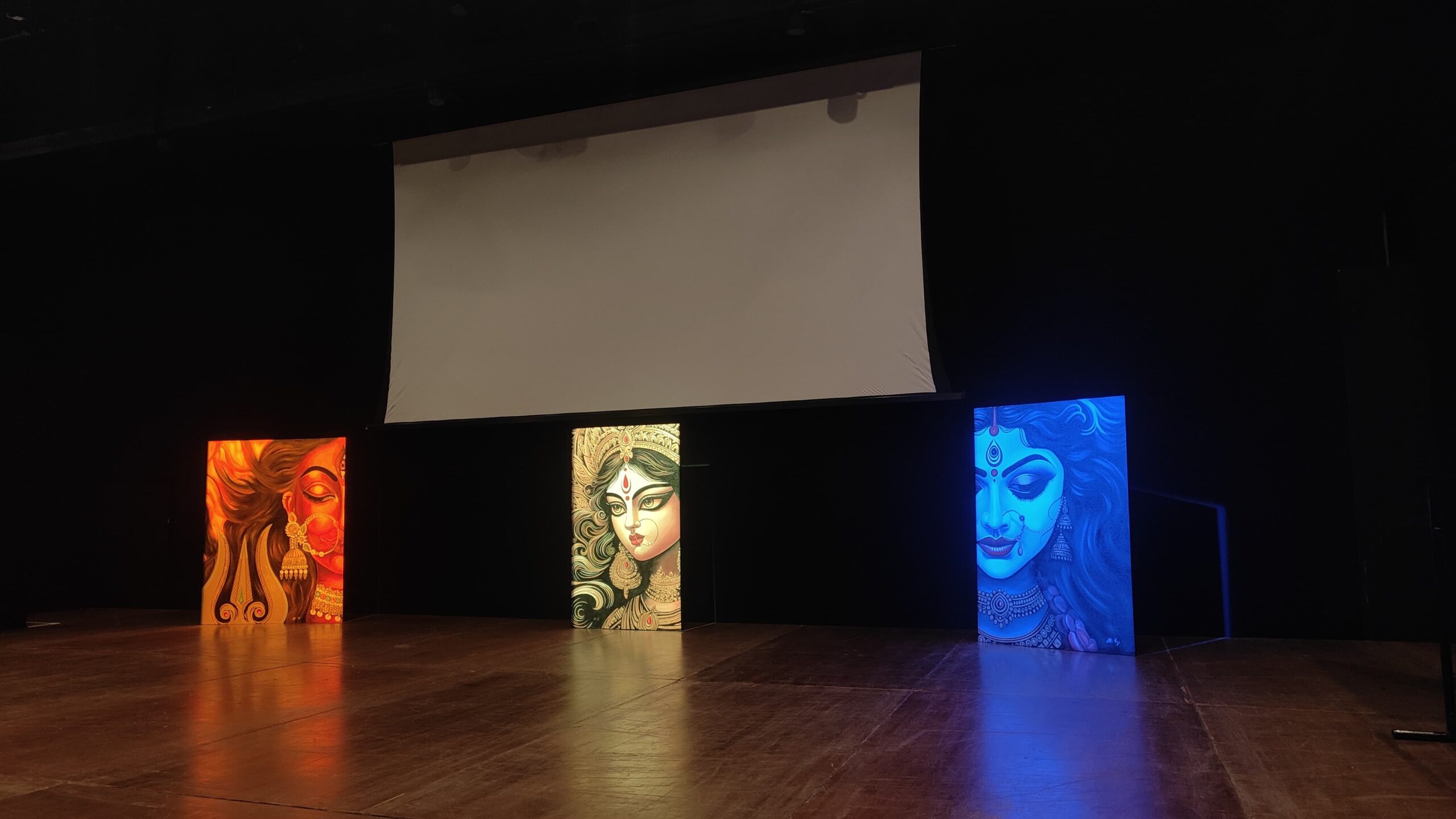
KAYA was more than just a stage performance; it was a step toward understanding our future, embracing our present reality, and bringing to life the dream we envisioned for our Dancers. It wasn’t simply about rehearsals or the final act on stage; it was about learning and living every aspect of stage production. From choosing themes and dance forms to crafting narrations, choreography, props, lighting, sound design, music, and costumes, every element held weight. At the same time, tasks like marketing, invitations, and managing social media formed the other half of the experience.
KAYA is the culmination of a team comprising not only those that were on stage but also those who worked in and around and behind the scenes splendidly to make our production real. The contribution of professionals who handled the administration, correspondence, marketing, stage setting, lights, sound, backstage, front stage, and little tasks that usually go unnoticed was our strength in more ways than we can describe. Junoon’s first production was whole and full from all of these parts coming together and enabling it to happen. KAYA was a special start for the people that put it on and made it real. One body danced it, but like they say, it takes a village!
We are grateful to perform on the stage, and in the future we hope the audience gets to see and appreciate our students on the stage too.
If you want any more official information on the show, please take a look at this brochure that was circulated at the show:
Comments